Why Summer Pushes Your Air Conditioner to Its Limits — And What You Can Do About It
There is a quiet irony embedded in how air conditioning systems operate: the very season when you depend on them most is also the season when they are most likely to struggle. Summer heat does not simply increase the demand placed on your unit — it fundamentally changes the conditions under which the system must work. Understanding this paradox is the first step toward protecting your comfort, your equipment, and your monthly energy budget.
The Physics of Peak-Season Performance
Air conditioners do not generate cold air. They remove heat from indoor air and transfer it outside. This process relies on a refrigerant cycle, in which a compressor pressurizes refrigerant to release heat outdoors while an evaporator coil absorbs heat from inside your home or building.
Here is where summer creates a problem. The efficiency of this heat transfer process depends heavily on the temperature difference between your indoor space and the outdoor environment. On a mild 70-degree afternoon, your system can expel heat outdoors with relatively little effort. But when outdoor temperatures climb into the 90s or beyond — conditions that are common across much of the United States during July and August — that temperature differential narrows dramatically. The compressor must work significantly harder to push heat out against a much warmer outdoor environment.
This is not a malfunction. It is thermodynamics. But it does mean your system consumes more electricity, experiences greater mechanical stress, and may fall short of your desired indoor temperature even when operating correctly.
Humidity: The Hidden Efficiency Drain
Temperature alone does not tell the full story. Humidity plays an equally important role in how hard your air conditioner works during summer months.
When indoor humidity levels are elevated — a common occurrence in humid climates across the Southeast, Gulf Coast, and Mid-Atlantic regions — your air conditioner must perform two jobs simultaneously: cooling the air and removing moisture from it. Dehumidification requires additional energy and places added strain on the evaporator coil. A system that is already working near its capacity due to extreme heat is now tasked with managing excess moisture as well.
High humidity also affects perceived comfort. Air at 78 degrees with 70 percent relative humidity feels significantly warmer than air at the same temperature with 50 percent humidity. This can lead occupants to lower the thermostat further, compounding the efficiency problem.
How System Age and Condition Amplify the Problem
A well-maintained system handles summer stress far better than one that has been neglected. Dirty air filters restrict airflow, forcing the blower motor to work harder. A clogged condenser coil — the outdoor unit — cannot release heat efficiently, which causes refrigerant pressures to rise and can lead to compressor damage over time. Low refrigerant levels, often the result of slow leaks that go undetected between service visits, further reduce the system's ability to transfer heat.
These issues are manageable under mild conditions but become acute during summer peaks. A system running at 85 percent efficiency in April may struggle to maintain comfortable temperatures in August, not because the unit has suddenly failed, but because the margin for error has disappeared.
Practical Steps to Maintain Efficiency This Summer
The good news is that most summer performance problems are preventable. The following measures can meaningfully improve how your system handles peak-season demands.
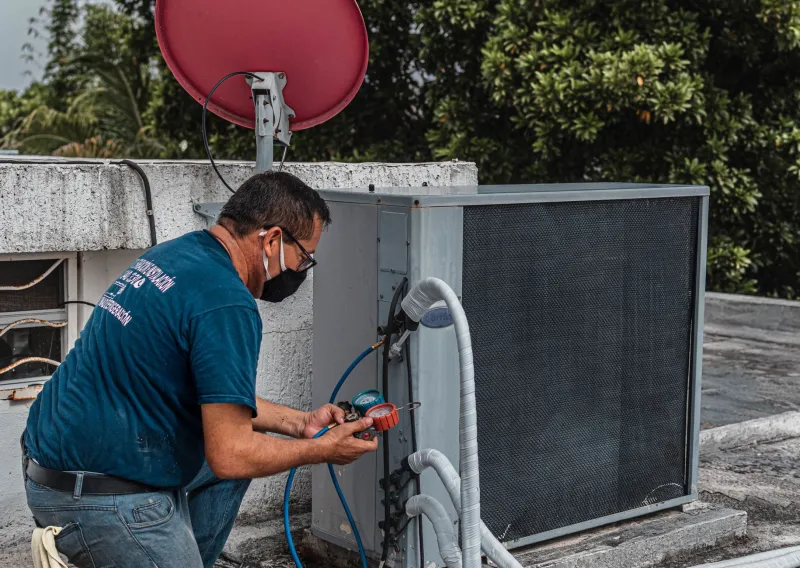
Schedule a professional tune-up before peak season. A certified HVAC technician can clean coils, check refrigerant levels, inspect electrical components, and verify that airflow throughout the system is unobstructed. Addressing small issues in May prevents larger failures in July.
Replace air filters regularly. During heavy-use months, filters should be inspected monthly. A clogged filter restricts airflow and reduces the system's ability to cool effectively. This is one of the simplest and most cost-effective maintenance steps available to any property owner.
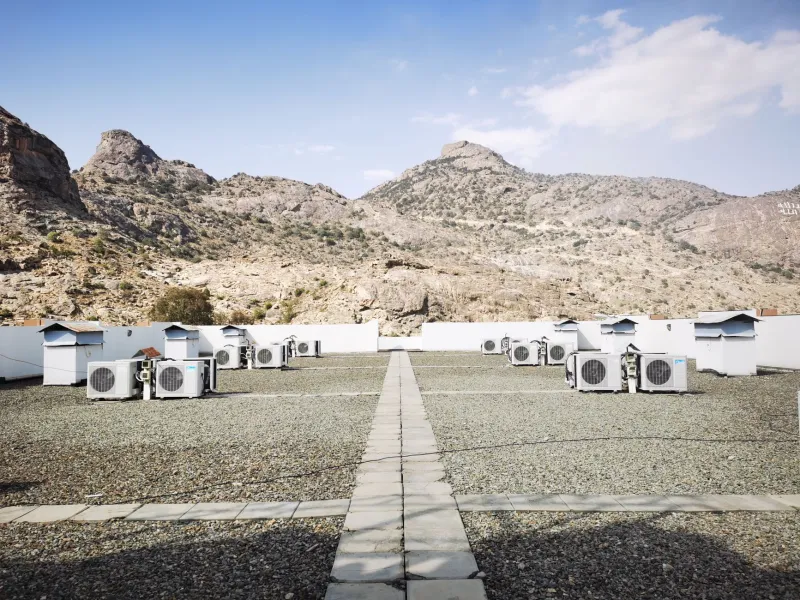
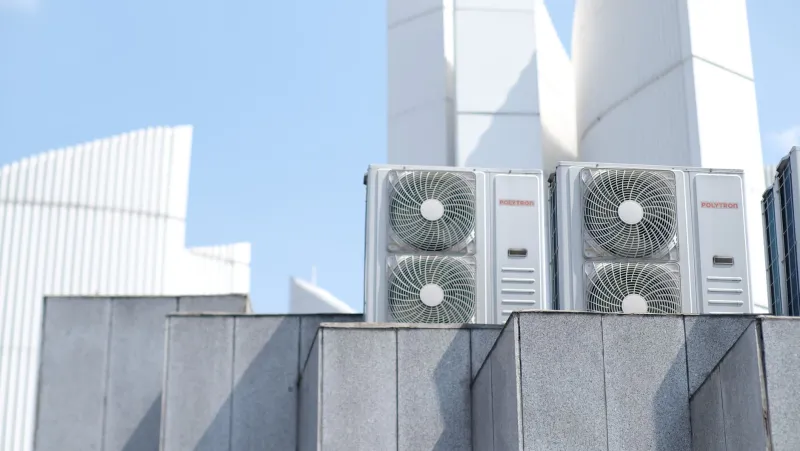
Keep the outdoor unit clear. The condenser unit needs adequate airflow to release heat. Trim vegetation, remove debris, and ensure there is at least two feet of clearance around the unit on all sides. Avoid placing objects near or on top of the unit.
Use a programmable or smart thermostat. Setting your thermostat to allow temperatures to rise slightly during unoccupied hours reduces the total runtime of your system and eases the cumulative stress of a long, hot summer.
Consider adding or upgrading whole-home dehumidification. In high-humidity regions, a standalone dehumidifier or a whole-home system integrated with your HVAC can significantly reduce the moisture burden on your air conditioner, improving both comfort and efficiency.
Seal air leaks and improve insulation. Hot outdoor air infiltrating through gaps around doors, windows, and ductwork forces your system to compensate continuously. Addressing these leaks can reduce cooling loads by a meaningful margin.
When Efficiency Issues Point to a Larger Problem
Some summer performance issues cannot be resolved through maintenance alone. If your system is more than 10 to 15 years old, is frequently cycling on and off, struggles to reach set temperatures even after servicing, or has seen a significant and unexplained increase in energy consumption, the underlying issue may be system capacity or equipment age.
Modern high-efficiency units — particularly those with SEER2 ratings of 16 or higher — are engineered to handle summer extremes far more effectively than older equipment. In many cases, the long-term energy savings from upgrading an aging system offset the cost of replacement within a few years.
The Case for a Proactive Approach
Summer will arrive whether your air conditioner is ready for it or not. The homeowners and business operators who experience the fewest disruptions — and the lowest energy bills — are those who treat HVAC maintenance as a seasonal priority rather than an emergency response.
At AC Service Pro, our technicians are trained to assess system performance under real-world conditions, not just check boxes on a maintenance form. Whether your concern is an unexplained spike in utility costs, a unit that struggles to keep up on the hottest days, or simply peace of mind heading into peak season, we are here to help.
Do not wait for a breakdown to find out how your system performs under pressure. Contact AC Service Pro today to schedule a comprehensive summer readiness inspection.